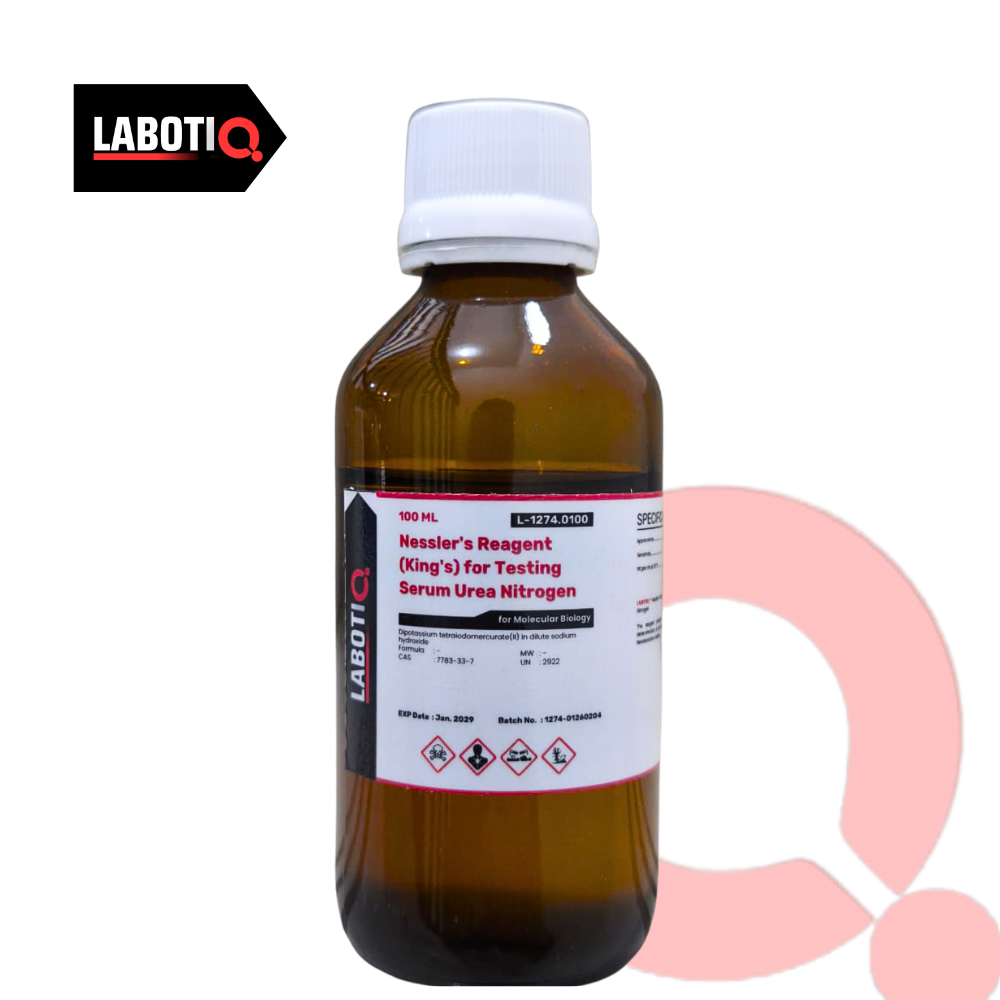
Nessler’s reagent is a pale yellow, strongly alkaline solution of potassium tetraiodomercurate(II) (K2[HgI4]) used primarily to detect trace amounts of ammonia (NH3) or ammonium ions (NH4+). It turns yellow to reddish-brown in the presence of ammonia, forming a precipitate. It is used in water quality testing and analysis. In serum urea nitrogen tests, it reacts with ammonia produced by enzymatic urea hydrolysis to form a yellow-to-dirty brown compound, providing a colorimetric measure of urea levels. Nessler’s reagent in laboratory settings, acting as a pale yellow solution that turns dark yellow or forms a brown precipitate (Milon’s base). It is commonly used for trace analysis, including testing water quality, laboratory samples, and in nitrogen analysis.